
The Psyche
Redefining Healthy: True Relationship With Food
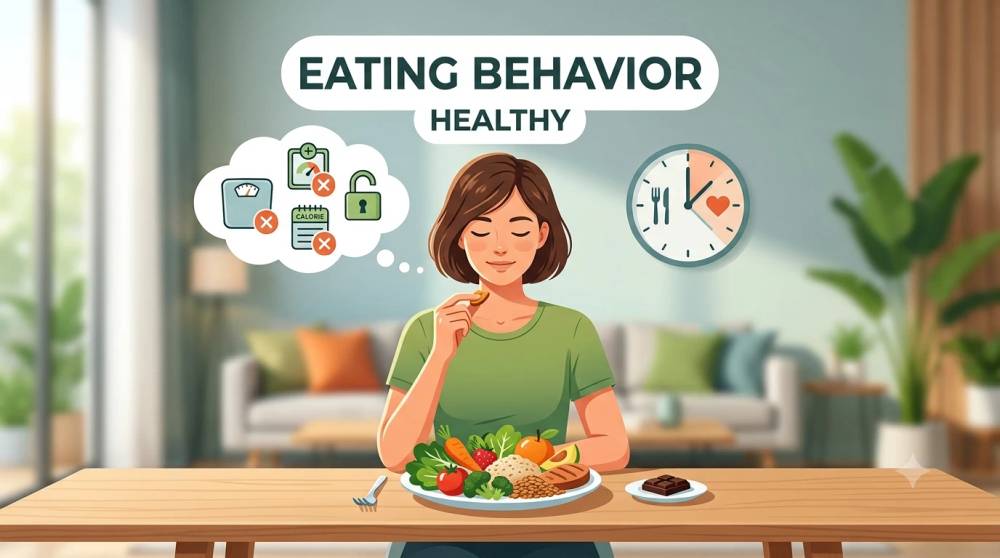
You stand in the supermarket aisle, staring at the back of a food label, meticulously calculating carbohydrates against your daily allowance. You set out with the simple intention of eating clean, but instead, you feel completely controlled, chronically stressed, and deeply exhausted by your own rules.
This constant mental math is not a sign of discipline. It is the core symptom of a fractured relationship with food, a reality that standard fitness trends systematically ignore. In today’s wellness culture, healthy is almost universally equated with restriction, deprivation, and hitting rigid numerical metrics. However, behavioral psychology proves that true nutritional health begins in the mind and is measured by how little mental space food worries occupy in your day. This article explores why relying on pure willpower compromises your long-term success and outlines what a truly flexible, sustainable relationship with food looks like for your body and mind.
Defining a Healthy Relationship with Food: Beyond the Macronutrients
Measuring health strictly by grams, calories, and macronutrients completely overlooks the most critical element of human nutrition: the subconscious mind. An apple delivers essential vitamins and fiber; that is its undeniable physiological profile. Yet, if you only eat that apple to forcefully suppress a craving while secretly wishing you were eating something else, the psychological utility is entirely lost.
A healthy relationship with food is defined by its fluid flexibility and its capacity to adapt to your body's authentic internal signals. It allows you to view food both as vital cellular fuel and as a genuine source of cultural pleasure, connection, and joy. When eating devolves into a purely rational, mathematical task, you completely disconnect from the somatic mechanisms designed to regulate your metabolism naturally.
In my daily work, I regularly observe that clients who exhibit the most extreme control over their food intake paradoxically present with the highest levels of metabolic fatigue. The chronic mental anxiety of constant tracking triggers a sustained stress response that impairs optimal digestion and actually amplifies emotional cravings for quick-energy carbohydrates.
Why Strict Restrictions Block Your Path to Balance
The societal narrative that we must categorize foods into good versus bad to maintain a healthy body is one of the most damaging myths in modern nutrition. The moment you place a specific food item on an absolute banned list, a predictable psychological mechanism triggers in your brain: the scarcity effect drastically heightens its perceived value.
The Pendulum Principle: The Swing Between Restriction and Overeating
Approaching your daily nutrition with a restrictive mindset is highly comparable to pushing a heavy pendulum forcefully to one side. The greater the restriction and the harsher the mental rules you impose, the more intense the underlying psychological tension becomes.
Eventually, an exhausting workday, an argument, or a moment of sheer emotional burnout occurs, and you are forced to let go of the pendulum. It swings back with violent force in the exact opposite direction. This inevitably leads to an episode of uncontrolable overeating, followed immediately by heavy guilt and a renewed, desperate vow to be more disciplined tomorrow. This exhausting cycle destroys your self-trust and destabilizes your physiological rhythm.
The Behavioral Psychology Behind Flexible Control
A critical look at modern nutritional science and behavioral psychology reveals that rigid rules are entirely counterproductive to long-term well-being. Even official guidelines from established institutions like the German Nutrition Society (DGE) place great emphasis on the roles of dietary variety, individual flexibility, and cultural enjoyment in everyday life.
Current clinical research confirms that individuals who practice what psychologists term flexible control over their eating behavior maintain a significantly more stable weight and experience higher psychological well-being than those utilizing rigid control. Flexible control means you fundamentally understand the principles of balanced nutrition, but you remain entirely capable of deviating from your structured plan without experiencing an ounce of anxiety, shame, or regret.
Three Warning Signs Your Relationship with Food Is Fractured
To understand exactly where your habits sit on the spectrum, it requires an honest audit of your daily routines and internal monologue. If you recognize any of the following three behaviors in your life, you are likely trapped in a restrictive cycle:
- Food as a primary coping mechanism: You regularly use food to self-soothe, manage stress, loneliness, frustration, or boredom because you lack alternative emotional regulation tools.
- Persistent food guilt: You experience hours of mental berating and psychological discomfort after eating a food that did not conform perfectly to your pre-set dietary rules.
- Social isolation: You actively avoid dinner parties, restaurant invitations, or family gatherings out of intense anxiety over losing absolute control over ingredients and portion sizes.
I understand this isolating reality intimately because it was once my own lived experience. For a long time, I systematically avoided social gatherings and refused to eat meals prepared by others, simply because I didn't want to cause any trouble. In truth, I felt incredibly safe within the strict walls of my controlled food bubble. It was only when I deliberately dismantled that rigid system that the persistent fear of losing control vanished, and true lifestyle freedom returned.
Reclaiming Your Natural, Intuitive Balance
Rebuilding a truly healthy relationship with food cannot be forced overnight; it is a gradual process of unlearning conditioned behaviors. The initial phase requires removing the intense moral weight you have attached to your plate. Foods are not inherently virtuous or sinful; they simply possess varying degrees of nutrient density.
Begin by gently shifting your focus back to your physical hunger and satiety cues, rather than relying blindly on a clock or an app screen to dictate your needs. When you learn to listen to what your body is communicating, food loses its intimidating, overwhelming power over your thought patterns.
What Is the Next Step?
Acquiring logical information is rarely enough to break deeply ingrained behavioral loops that have been reinforced for years or even decades. If your mind is constantly looping around meal choices and you have lost all sense of ease around nutrition, a personalized, structured framework is the most direct path out of the control trap.
To understand why conventional, restrictive approaches have continuously failed you in the past, it helps to examine the underlying psychological architecture in our deep-dive article Why do I keep failing my diet? If you want to learn specific, actionable strategies to deconstruct unconscious eating impulses, you can read our comprehensive guide on How to stop emotional eating.
You now understand that a genuinely healthy relationship with food has nothing to do with deprivation, but everything to do with mental peace and metabolic intuition. However, translating this theory into a demanding, hectic daily routine requires more than just good intentions - it requires a tailored strategy built around your unique lifestyle. I invite you to take the first definitive step toward sustainable balance and apply for my exclusive 12-week 1:1 coaching journey, where we will permanently transform your nutrition from a source of stress into a source of strength.