
The Partnership
How Much Does Working With a Nutrition Coach Cost?
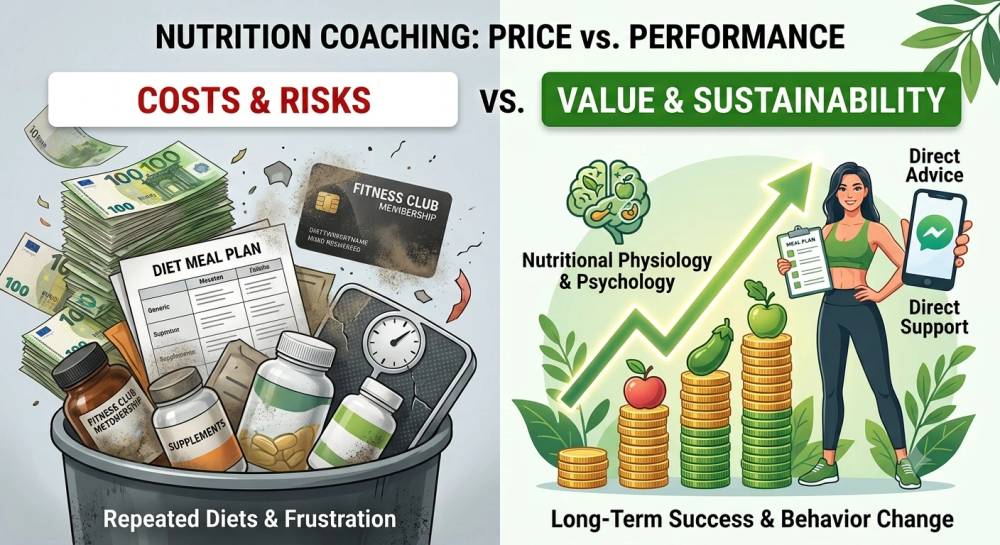
Looking at your bank statement can be uncomfortable. What hurts significantly more, however, is realizing you’ve spent thousands of dollars over the years on failed restrictive diets, unused gym memberships, and shelves full of useless supplements.
When you reach a point where your body simply refuses to cooperate, a natural question arises: How much does professional nutrition coaching actually cost - and what price tag is truly justified?
Average Rates: What Does a Nutrition Coach Cost?
Pricing across the health and wellness industry varies drastically. You will find single sessions for $70, all the way up to high-end, multi-month signature programs costing several thousand dollars.
To understand what constitutes a fair investment, you first need to understand the three primary pricing models:
- Hourly Rates ($80–$180 per hour): The standard approach for short-term, symptom-focused advice or one-off consultations.
- Assessment Packages ($250–$600 flat fee): A bundle typically consisting of an initial deep-dive intake assessment plus 1 to 2 short follow-up sessions.
- Holistic 1:1 Transformation Programs ($1,500–$3,500 for 12 weeks): A high-touch, multi-month partnership combining nutritional science, ongoing daily support, and behavioral psychology.
Single Sessions vs. Holistic 1:1 Transformation Programs
A single 60-minute consultation sounds financially approachable. The core limitation, however, is structural: in 60 minutes, you can receive information, but you cannot rewire deep-seated behavioral patterns.
If you have struggled for years with emotional eating, hormonal shifts, or chronic fatigue, you do not need another PDF listing "good" and "bad" foods. You need guidance through your real, messy daily life - especially during high-stress moments.
In my practice, I consistently see that single-session models miss the core issue. Clients receive 60 minutes of theoretical advice, only to be left completely on their own when the reality of a stressful daily routine hits. Genuine, sustainable behavioral change requires continuous fine-tuning over a period of weeks - not isolated moments of information transfer.
What Factors Drive the Cost of Nutrition Coaching?
A higher price tag does not automatically make an offer overpriced, just as a low price does not make it a bargain. The true indicator of value is the depth of support and the sustainability of the outcome.
What Makes a Price Fair? A price is fully justified when it covers far more than just time spent on a live call. A dedicated practitioner spends hours outside your sessions analyzing your food journals, identifying cognitive patterns, evaluating biofeedback, and tailoring real-time adjustments.
Red Flags: How to Spot Overpriced or Low-Value Offers
Exercise caution if a coach or program demands a premium investment without offering clear, individualized depth:
- Rigid, Template-Based Plans: You pay thousands only to receive a standardized PDF meal plan with zero personalization.
- Hidden Product Upsells: The practitioner pressures you to purchase proprietary shakes, meal replacements, or multi-level marketing supplements.
- Opaque Agreements: A total lack of transparency regarding qualifications, methods, or scope prior to sign-up.
The Difference Between Symptom Management and Sustainable Behavioral Change
Ultimately, any program that becomes ineffective after a few weeks is overpriced - regardless of its price tag. A reliable baseline for fair pricing in high-support coaching is the integration of nutritional physiology with behavioral psychology.
A fair price reflects far more than a coach’s theoretical knowledge; it represents the depth of personal guidance and the long-term sustainability of your results.
The Health Insurance Limitation: Why Out-of-Pocket Coaching Wins
Many clients begin their search looking for insurance-covered consultations (such as DGE-certified consultations under standard health insurance models in Europe or traditional coverage in North America). While insurance may subsidize a small portion of basic sessions, these frameworks come with strict limitations.
Insurance systems are designed around clinical information delivery. For complex challenges—such as emotional eating, diet trauma, or deep lifestyle transformations—the standard 3 to 5 session clinical model is insufficient.
Because of these constraints, many women choose to invest out-of-pocket for private 1:1 coaching. Free from rigid insurance protocols, private coaching offers total flexibility, ongoing messaging support, and an authentic partnership focused on root causes rather than quick fixes.
Calculating Your True ROI: Why Quick Fixes Cost More Long-Term
Focusing solely on upfront costs obscures the true Return on Investment (ROI) of your health. Consider the personal and financial cost of remaining stuck in the diet cycle for another five years:
- Wasted Expenses: Trendy superfoods, "fat-burner" supplements, and unguided online programs easily accumulate to thousands of dollars over time.
- Lost Energy and Productivity: Persistent exhaustion, digestive distress, and brain fog severely compromise your quality of life, focus, and career momentum.
- Long-Term Health Costs: Unaddressed chronic stress and physiological imbalances lead to far higher medical expenses down the line.
One client in her late 40s had spent over $3,000 across five years on alternative practitioners, extensive blood panels, and generic online programs. Yet her symptoms kept returning. Real transformation only happened when we used a structured 12-week framework to adapt her habits step-by-step around her demanding work routine - achieving lasting results without extreme restriction.
What to Expect After Your Initial Consultation
A sustainable coaching process never starts with a rigid, one-size-fits-all plan. It moves through a clear, structured framework designed to restore safety and autonomy:
Comprehensive Assessment: Deep analysis of your baseline health, physiological symptoms, past struggles, and lifestyle roadblocks.
Strategic Roadmap: Developing realistic, step-by-step habits without radical restrictions or food elimination.
Iterative Adjustments: Weekly refinements to adapt to real-world stress rather than expecting perfection.
True Independence: The ultimate goal is always to equip you with the knowledge and self-awareness so that you eventually do not need a coach anymore.
When you understand how your physiology and psychology work together, you become permanently immune to health trends and fad diets.
What's the Next Step?
If you want to understand how targeted nutrition guidance fits your unique lifestyle, explore these deeper resources:
- Learn more about professional credentials in our guide: Dietitian vs. Nutrition Coach: Who Do You Need?
- Discover how to find the right fit for your personal goals: How to Find the Right Nutrition Professional for Your Goals
Ready to stop guessing and start building a sustainable relationship with food and your body? In an initial consultation, we will analyze your current baseline and evaluate whether our 1:1 coaching journey is the right fit for your goals.